In-Batch Negatives Can Silently Cripple LLM-Encoded Sequential Recommenders
How training objectives and negative sampling affect LLM-encoded sequential recommendation, and why in-batch negatives can quietly degrade it.
AI for recommendation & personalization
We research how large language models understand intent and evolving behavior, and build recommendation and personalization systems for content, learning, and products.
Research
Recommendation systems still struggle to capture nuanced intent and to keep up as behavior and catalogs change. Our work looks for better ways to represent and reason about that behavior.
View Google ScholarTraining techniques, such as better contrastive objectives and negative sampling, that make LLM-encoded recommenders more accurate and robust.
Combining text, visual, and behavioral signals into unified representations that capture relevance more completely.
Remembering how interests shift over time, so recommendations keep up as people change.
Models that carry across domains without large-scale data, and evaluation that measures real-world relevance beyond offline benchmarks.
Publications
How training objectives and negative sampling affect LLM-encoded sequential recommendation, and why in-batch negatives can quietly degrade it.
LLM-based behavioral memory for recommendation as preferences change over time.
Applications
The same understanding of intent and behavior powers content discovery and learning today, and is the basis of our research into product discovery.
 Scan News
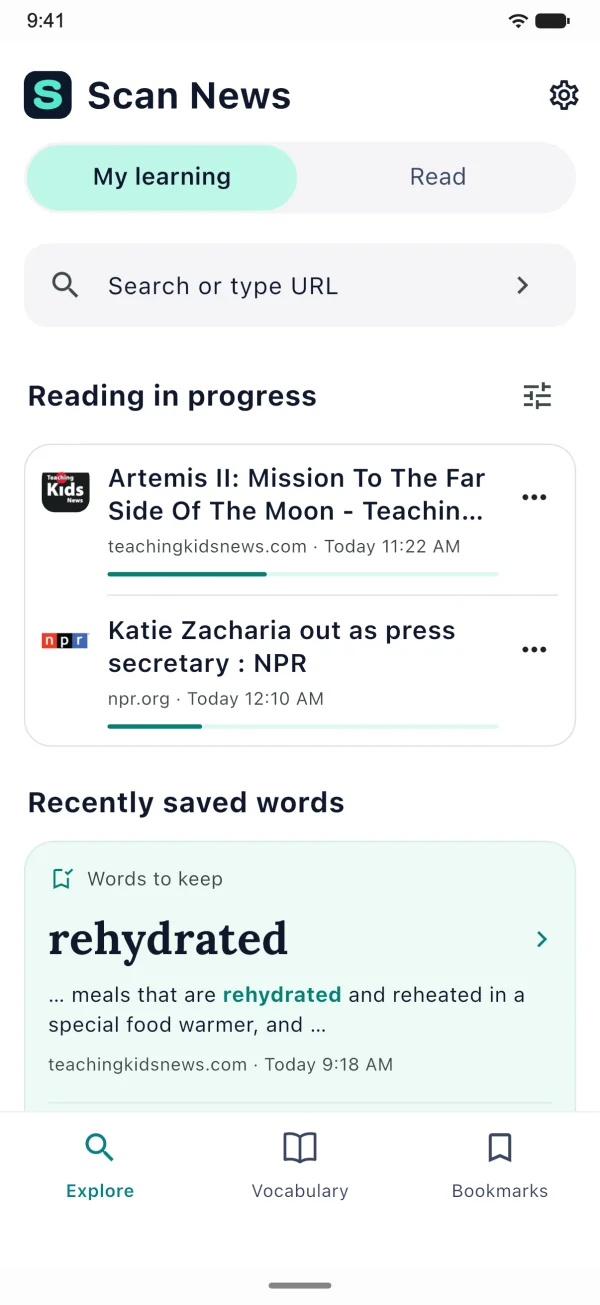
Personalized content and learning: read English news you care about, tap unfamiliar words, and build your own vocabulary.
Research into how LLM-based behavioral understanding can make product recommendation more accurate and adaptive over time, with lightweight models that don't depend on large-scale data.
About
NextMining is an independent AI research and product studio founded by Younggue Bae, Ph.D. The work has followed one thread: from understanding opinions and intent in text, to recommendation and personalization systems that put that understanding to use.
Publications on Google ScholarOpinion mining, sentiment analysis, and text mining: understanding intent in unstructured text.
Document quality, shopping keyword extraction, and related-search recommendation for web search and content discovery.
Aspect-based summarization of customer reviews with fine-tuned LLMs.
Applying LLMs to retrieval, discovery, and personalization at scale, alongside independent research on LLM-encoded recommenders.